
Revival of a Rare Species – Himalayan Serow Sighted in Himachal After 20 Years

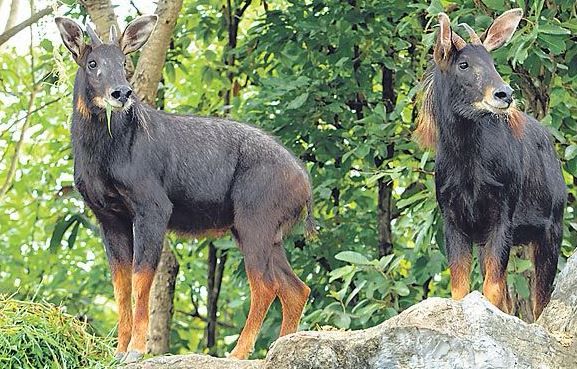
Dalhousie, Himachal Pradesh – For the first time in almost two decades, the Himalayan serow (Capricornis thar) has been spotted in the catchment forests of Dalhousie, marking a major conservation achievement for the elusive mountain goat species. The Himalayan serow was seen on video by forest field staff patrolling the forest catchment area in early August 2026, who have been monitoring the presence of wild animals in the region.
Sighting Details and Location
The Animal in the Catchment Forests, Kalatop-Khajjiar Wildlife Sanctuary, Chamba on August 2, 2026 Catchment forests bordering the Kalatop-Khajjiar Wildlife Sanctuary in the Chamba district, Himachal Pradesh, was video-recorded at a location on August 2, 2026. This is the first confirmed sighting of the animal from the Dalhousie landscape in more than two decades.
– Species: Himalayan serow (Capricornis thar)
– Area: Dalhousie catchment forests, adjacent to Kalatop-Khajjiar Wildlife Sanctuary
– Recording date:Aug. 2026 1st week (recorded in a forest patrol)
– Importance: The earliest visual record of this landscape in 20 years
Dalhousie Divisional Forest Officer Kuldip Singh Jamwal said footage of the Himalayan serowwhich is an occasional prey of the snow leopardhas proved the existence of this animal in catchment forests.
About the Himalayan Serow
The Himalayan serow is a small, medium sized caprid (goat-antelope family). This species is sort of a ‘hybrid’, being goat-like, donkey-like, and antelope-like – rather than having a distinct and separate species-specific appearance. It has an important ecological role in the mountain terrain of the Himalayas.
– Scientific name: Capricornis thar ( or so sometimes in the term of: – • SAPELINIDAE The binomial name for the Sumatran serow is often listed as Capricornis sumatraensis thar, however, this is not the accepted scientific name.
– Conservation status: Vulnerable as a species on the IUCN Red List with continued population reduction caused by habitat destruction, deterioration and hunting.
– Protection under law: Schedule I of the Wildlife Protection Act, 1972.
–Distribution: Southern slopes of the Himalaya from Jammu and Kashmir in the west to Arunachal Pradesh in the east; also found in some parts of NE India.
The species was believed to be locally extinct in the parts of Himachal after disease struck in the mid-2000s, so the new sighting is a hopeful sign of the population bouncing back.
Conservation Significance
Wildlife experts have called it a major boost for conservation in the hill state. The video documentation is likely to add to biodiversity records of the western Himalayas and act as a baseline for future research and habitat conservation.
Key implications include:
– Biodiversity validation: Affirms that high-altitude ungulates are suited to the Dalhousie-Kalatop landscape
– Ecosystem health indicator: Serows are negatively affected by habitat alteration. Their resurgence implies that forest health is on the mend.
– Monitoring priority: Vulnerable status so need further camera-trap and anti-poaching programmes
Broader Context: Serow Sightings in India
This record is one of many serow discoveries in India this year:
– Spiti Valley (Himachal): 1st record of Himalayan serow in cold desert area close to Hurling village.
– Assam: Found in Manas Tiger Reserve, extending known distribution into northeastern ecosystems
– Other Himalayan states: Narrated in Jammu & Kashmir, Uttarakhand, Sikkim, and Arunachal Pradesh
These stray sightings highlight the significance of connected forest corridors and protected areas for the future of this furtive, cliff-dwelling mammal.
Himalayan serow makes presence felt after 20 years in Dalhousie Putting conservation investments, community sensitisation, and habitat management into place can revive rare species, Himalayan serow getting sighted after two decades at Dalhousie is not just a camera trap curiosity but proof of a successful story.
References:
The Tribune India: “Elusive Himalayan Serow spotted in Dalhousie forests after two decades” August 4, 2026
Hindustan Times: “Himalayan Serow makes camera debut in Dalhousie” August 5, 2026
GKToday: “Himalayan Serow Sighted in Himachal Pradesh After Two Decades” August 5, 2026
Current Affairs Pulse: “Himalayan Serow Recorded in Dalhousie Forests After Two Decades” August 5, 2026
Prajasaatta: “Himalayan Serow: हिमाचल के जंगलों में 20 साल बाद पहली बार” August 4, 2026
The Times of India: “Rare Himalayan Serow caught on camera in Dalhousie after 20 years” August 4, 2026
United News of India (UNI): “First video evidence of Himalayan Serow recorded in Himachal’s Dalhousie in 20 years” August 5, 2026
Great Himalayan National Park: “Capricornis thar (Himalayan serow)”
GKToday: “First recorded human sighting of Himalayan serow” December 17, 2020
Vajiram & Ravi: “Himalayan serow, Habitat, Distribution, Conservation, Latest News” August 7, 2026