
Ecological Debt: Are We Borrowing Nature From Future Generations?

Every year, governments publish financial budgets.
Businesses prepare balance sheets.
Banks evaluate loans.
Families manage savings.
Modern society has become exceptionally skilled at measuring financial debt.
Yet there is another form of debt that rarely appears in economic reports despite influencing every nation on Earth.
It is ecological debt.
Every forest cleared without restoration.
Every aquifer depleted faster than it can recharge.
Every river polluted beyond its natural ability to recover.
Every tonne of carbon released into the atmosphere.
Every species pushed closer to extinction.
These actions represent withdrawals from Earth’s ecological savings account.
Unlike financial debt, nature does not issue invoices.
The costs accumulate quietly until ecosystems begin to fail.
The greatest environmental challenge of the twenty-first century may not simply be climate change.
It may be the growing ecological debt that humanity continues passing to future generations.
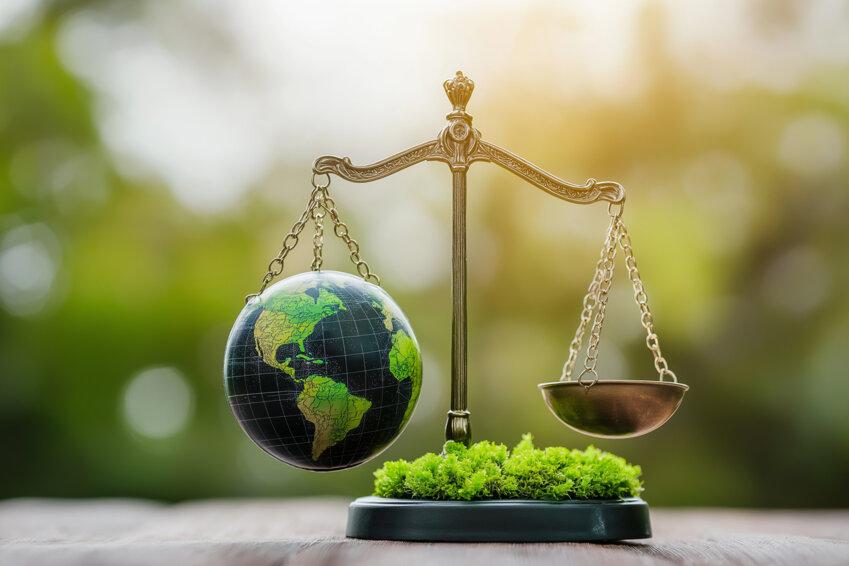
Living Beyond Nature’s Budget
Every ecosystem has a natural capacity to regenerate.
Forests regrow.
Wetlands filter water.
Soils rebuild organic matter.
Rivers recover from seasonal stress.
Wildlife populations reproduce.
These processes take time.
Problems arise when human consumption exceeds nature’s capacity to recover.
Imagine withdrawing money from a bank account faster than new income arrives.
Eventually, the balance reaches zero.
The same principle applies to ecosystems.
When extraction permanently exceeds regeneration, ecological debt begins to accumulate.
Debt That Future Generations Must Repay
Financial loans can often be repaid with money.
Ecological debt is far more complex.
A mature forest may require decades to recover.
Healthy topsoil can take centuries to form.
Groundwater aquifers may need generations to recharge.
Species driven to extinction cannot be recovered at all.
This makes ecological debt one of the few debts that future generations inherit without choosing to create it.
Why GDP Cannot Measure Ecological Debt
Economic growth remains one of the most important indicators of national development.
However, GDP measures economic activity—not ecological sustainability.
A country may increase industrial production while simultaneously losing forests, degrading rivers, reducing biodiversity, and exhausting groundwater.
Financial wealth can rise even as ecological wealth declines.
Without accounting for ecological debt, development may appear successful while quietly reducing the natural assets upon which future prosperity depends.
Towards an Ecological Balance Sheet
Imagine if every city, business, or nation published two annual reports.
The first would measure financial performance.
The second would measure ecological performance.
Questions might include:
- How much forest was restored compared to how much was cleared?
- Was groundwater recharge greater than groundwater extraction?
- Did biodiversity improve or decline?
- Was more carbon removed than emitted?
- Did ecosystems become healthier or weaker?
Such ecological accounting would allow societies to evaluate whether development is truly sustainable.
From Extraction to Regeneration
Reducing ecological debt requires changing the relationship between humanity and nature.
Success should no longer be defined solely by how efficiently resources are extracted.
It should increasingly be measured by how effectively ecosystems are restored.
The future economy must move from extraction to regeneration.
Every development project should ask not only:
“What will this produce?”
But also:
“What will this restore?”
HFN Solution Framework
Heavendoo Foundation believes ecological debt should become a measurable environmental indicator guiding restoration and development.
Short-Term
- Introduce public education campaigns explaining ecological debt through everyday examples.
- Develop local ecological audits covering forests, water bodies, biodiversity, and soil health.
- Encourage communities to measure ecological losses alongside development gains.
Medium-Term
- Publish annual HFN Ecological Balance Sheets for restoration projects.
- Create tools that estimate ecological gains achieved through afforestation, wetland restoration, and groundwater recharge.
- Partner with academic institutions to develop ecological accounting methodologies.
Long-Term
- Launch the HFN Ecological Debt Index, helping cities, institutions, and communities evaluate whether they are restoring more nature than they consume.
- Develop AI-powered ecological accounting systems integrating satellite imagery, field observations, biodiversity monitoring, and climate indicators.
- Advocate policies requiring major infrastructure projects to assess long-term ecological debt before approval.
HFN Vision 2040
Heavendoo envisions a future where every generation leaves behind more ecological wealth than it inherited.
Development should not be measured only by buildings constructed or industries established.
It should also be measured by forests restored, rivers revived, biodiversity protected, and natural systems strengthened.
A sustainable society is one that repays its ecological debt instead of transferring it to the future.
HFN Observation
“Financial debt limits tomorrow’s economy. Ecological debt limits tomorrow’s civilization.”
Every decision humanity makes today either increases or reduces the ecological inheritance of future generations.
The question is no longer whether we can afford to restore nature.
The question is whether we can afford not to.
HFN Research Questions
- Should countries publish annual Ecological Balance Sheets alongside financial budgets?
- Can ecological debt become a national sustainability indicator?
- How can AI, satellite monitoring, and environmental accounting help measure ecological debt in real time?
- Should every major development project include an Ecological Debt Assessment before receiving environmental clearance?