
The Urban Heat Island Effect: Why Our Cities Are Becoming Hotter Every Year

Every summer seems hotter than the last.
Across the world, cities are recording higher temperatures, longer heatwaves, and increasing cases of heat-related illnesses. Surprisingly, this rise in temperature is not driven only by climate change. A major contributor is a phenomenon known as the Urban Heat Island (UHI) Effect—where cities become significantly hotter than the surrounding rural areas.
As urbanization accelerates, the materials we build with are quietly reshaping local climates.
What is an Urban Heat Island?
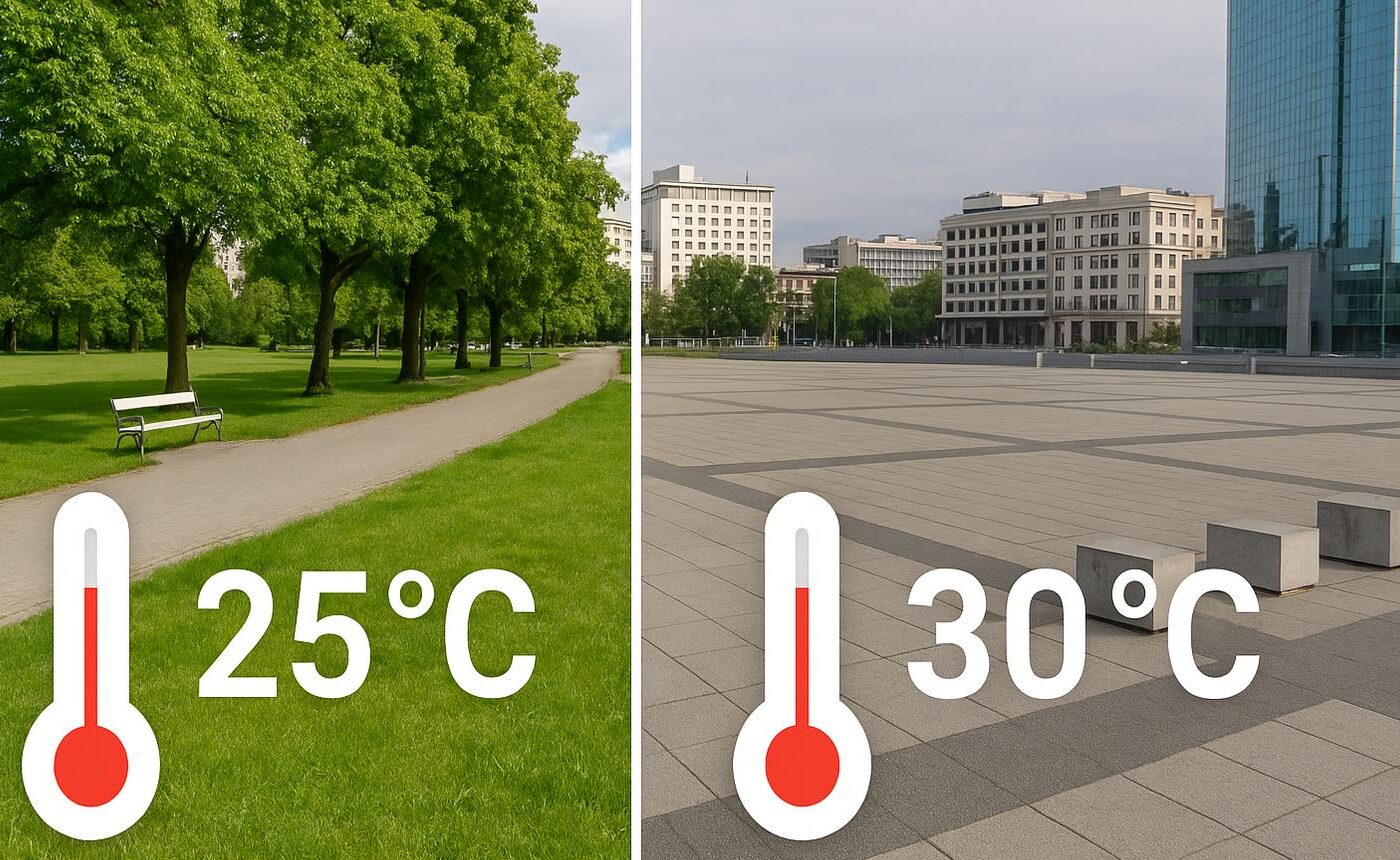
An Urban Heat Island is created when natural landscapes are replaced with concrete, asphalt, glass, and steel.
Unlike soil and vegetation, these materials absorb large amounts of solar energy during the day and slowly release it at night.
As a result, cities remain warm long after sunset, preventing temperatures from cooling naturally.
Studies have shown that densely built urban areas can be 3–5°C warmer than nearby rural regions, with some locations experiencing even greater differences during heatwaves.
Why Are Cities Heating Up?
Several factors contribute to the Urban Heat Island effect:
- Rapid urban expansion with fewer green spaces
- Black asphalt roads that absorb heat
- High-rise buildings that trap warm air
- Air conditioners releasing heat outdoors
- Reduced airflow due to dense construction
- Loss of open land and natural vegetation
Individually these factors seem manageable, but together they create a self-reinforcing cycle of rising temperatures.
Heat is More Than Just Discomfort
Extreme urban temperatures affect far more than personal comfort.
They increase:
- Electricity demand for cooling
- Risk of heatstroke and dehydration
- Air pollution and ozone formation
- Water demand
- Stress on public health systems
Heat also disproportionately affects children, elderly citizens, outdoor workers, and economically vulnerable communities who often lack access to adequate cooling.
The Economic Cost of Heat
Rising urban temperatures also carry significant financial consequences.
Businesses experience reduced worker productivity during heatwaves.
Governments spend more on healthcare, emergency response, and electricity infrastructure.
Families face higher energy bills as air conditioners run longer throughout the summer.
The Urban Heat Island effect is therefore not only an environmental issue—it is an economic one.
Cooling Cities Naturally
While air conditioners provide temporary relief, they often worsen outdoor temperatures by releasing waste heat into the environment.
Long-term solutions require smarter urban planning.
Cities can reduce heat by:
- Preserving existing green spaces
- Using cool roofs and reflective building materials
- Increasing permeable surfaces
- Protecting lakes and wetlands
- Expanding urban forests and roadside vegetation
- Designing buildings that improve natural airflow
These strategies reduce temperatures while also improving air quality, biodiversity, and public health.
Designing Climate-Resilient Cities
Future cities cannot rely solely on technology to combat rising temperatures.
Urban planning must integrate nature as essential infrastructure rather than decorative landscaping.
A cooler city is not simply one with more air conditioners—it is one designed to absorb less heat in the first place.
As climate change continues to intensify, reducing the Urban Heat Island effect will become one of the most important challenges for sustainable urban development.
HFN Observation
“Cities were built to support human life—not to become heat traps. Every planning decision made today will determine whether future generations inherit cooler communities or hotter concrete landscapes.”
The fight against rising urban temperatures begins long before the next heatwave. It begins with how we choose to design our cities today.