
The Hidden Landslide Crisis in India: Why the Western Ghats Are Getting Riskier.

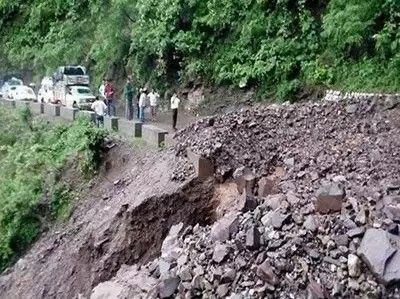
Across six Indian states, the Western Ghats – a biodiversity hotspot, a World Heritage Site – is facing a growing landslide crisis that can be attributed to a fatal combination of extreme monsoon rains, geological weakness, and decades of unchecked development. Whileheavy rainfall is the immediate trigger,experts assertthat the vulnerability to sliding is largely a result ofhuman activity-logging, mining, road construction and weak environmental laws-that have destabilised natural slopes.
A Series of Catastrophes
The region’s escalating risk is illustrated by repeated disasters:
– The 2014 Malin landslide (Maharashtra), killed more than 150 people
– Hundreds of deaths during Kerala landslides in 2018–2019, which caused major damage in the areas of Kavalappara, Puthumala, and many others
– The Pettimudi landslide (Munnar), killed 66 people in 2020
– The 2024 Wayanad landslides were directly linked to the intersection between record rainfall events and shear zones
– Further landslide occurrences during the monsoon in 2026, which led to blocked roads and displaced populations in Kerala, Karnataka and Maharashtra.
These are not one-off events but indicative of stress within the system.
The Vulnerability of the Western Ghats
1. Natural Propensity:
The Western Ghats have been naturally susceptible to landslides due to several factors:
– Steep, dissected terrain with many slopes that were susceptible to sliding if the soil became saturated
– Weathered geology The basaltic and metamorphic rocks in the Western Ghats have weathered to form deep fracture networks and shear zones that fail when the pressure from groundwater increases
– The monsoon in the Western Ghats is extremely heavy, and is responsible for bringing one of the heaviest periods of rainfall to parts of India. Over-saturation of ground will have caused the groundwater pressure, pore-water pressure, and the reducedshear strength of soil.
While the Western Ghats share similarities with the tectonically unstable Himalayas, landslides here are caused by rain events on heavily weathered and developed slopes.
2. Anthropogenic Amplifiers:
Natural susceptibility to landslides has been significantly increased due to:
– Deforestation and land-use changes: Conversion of forestland for use as tea, coffee, spices plantations, resorts and other housing structures removes a large proportion of the root system that binds the soil.
– Quarrying, tunneling and blasting: Drilling into rock at stone, river, and Hydel power project sites destabilises hillsides, and breaks up rocks which fail due to high groundwater pressure.
– Roads and hillsides cuts. Many roads are constructed with unstable hillcuts and poor engineering. Road and hillside cuts lead to failure.
– Un regulated construction: Poor design of houses and terraces added with loads to landslides and soil erosion.A 2026 Idukki study revealed a link between the ecology and local deforestation/human population density of landslides zones. An IIT-Dharwad study on the portion of the Western Ghats found that60%of it has become unstable for landslides.
3. Institutional Failures:
Despite numerous warnings, regulatory frameworks in the region remain incomplete or widely contested:
– Delay in ESA (Ecologically Sensitive Area) notifications:Seven draftESA notificationshave been circulated by the UnionEnvironment Ministrysince 2011. However, Karnataka authorities have repeatedly rejected them citing economic consequences of conservation policy as reason for delay.
-Weak enforcement:There has been limited adherence toland-use plans, construction regulations and Coastal Zone Regulations, contributing to the spread of construction activities into landslide-prone zones.
– Inadequate early-warning systems: The use of sensor networks to measure risk is now being piloted in Kerala and Karnataka, though its application is still limited and the effectiveness for local level usage has not proven its potential.
Many experts view the narrative of”sustainability” as a guise for “organized greed”, with short-term development policies trumping environmental well-being.
Impact of Climate Change:
The monsoon’s unpredictability is being exacerbated by a changing climate, which causes periods of intense and uncharacteristic rainfall events to become more common, thus overwhelming the capabilities of natural land stability. Although rainfall alone does not constitute the sole cause of natural disasters, it does act as a catalyst that triggers a catastrophic sequence when exposed soil is already weakened. As one geographer noted, Kerala has failed to heed lessons from the 2018 floods. Its wetlands continue to erode and its hillsides are being built upon, worsening the already extreme rainfall of the monsoon season.
What has to change to cope the crisis:
Disaster management policy needs to evolve from relief and rehabilitation to a framework for risk mitigation:
– Finalize and enforce ESA notifications: The Union Environment Ministry needs to put into practice protected regions, blocking construction operations, quarrying and widespread deforestation in critical zones.
– Soil stabilization for infrastructure projects:Slope failure associated with road construction/landslides needs to be countered with the mandates of comprehensive geotechnical studies and engineering interventions to prevent landslide-induced impacts.
– Regenerate natural ecosystems: Regenerating forestland on depleted slopes, re-establishing wetlands and developing a policy that discourages construction in landslide hotspots identified through advanced drone surveillance technology and risk modelling is necessary.
– Risk management through local alert systems: The existing sensor network for identifying and reporting danger must expand. Citizens need to be trained and empowered to undertake evacuation measures safely using local warning systems.
– Paradigm shift in development: Environment protection should supersede unchecked real estate and tourism ventures in geologically fragile zones.
In Conclusion:
The landslide crisis in the Western Ghats is not just a natural tragedy; it is a consequence of ill-conceived planning andpolicy failures. While the region’s natural make up predisposes it to landslides and is susceptible to climatic change, human interventions are the ultimate architects of recurring disaster. Immediate, comprehensive interventions will be needed to control development and safeguard these geologically vulnerable, irreplaceable natural assets- or the Ghats will continue to be washed away, claiming precious lives and a cherished landscape.
References:
1. The Hindu:“2024 Wayanad landslides: Study reveals the interplay of climate and geology” 9 August 2026
2. Onmanorama:“14% of Kerala prone to floods, landslides; Parliament panel highlights gaps in warning systems” 9 August 2026
3. Mongabay India: “Why Western Ghats states can’t agree on Eco-Sensitive Areas”10 August 2026
4. Frontiers in Remote Sensing:“Integrated eco-environmental risk mapping in the mountainous tropical landscapes of the Western Ghats, Kerala”13 August 2026
5. The Indian Express: “The dark forest of Katlekan: Why we must stop the plunder of the Western Ghats”28 August 2026
6. Green Minute:“Western Ghats ESA Rejection – Is Karnataka ignoring eco-hazardous zones?” 28 August 2026
7. India Observers:“Western Ghats Landslide Preparedness: 2026”19 August 2026
8. TNC English:“Western Ghats: Why Is the Ecologically Sensitive Area Being Reduced? What Are the Disasters Telling Us?”11 August 2026
9. Media India EU:“India’s mountains continue to crumble despite years of warnings” 12 August 2026
10. Chetan Bharat Current Affairs: “Kerala Landslides: UPSC Current Affairs Analysis”10 August 2026
11. Scienmag:“Drone Mapping Reveals Hidden Slope Instability Above Indian Hamlet” 29 August 2026
12. TrackNation:“Natural Hazards in India — Floods, Droughts, Landslides, Cyclones (UPSC Geography)” 31 August 2026
13. Anantam IAS: “Western Ghats ESA: Sixth Draft Notification and the States’ Response”1 September 2026
14. GKToday:“Differentiate the causes of landslides in the Himalayan region and Western Ghats (UPSC 2021)”2 September 2026