
From Pilot to Policy: How Different Countries Are Implementing Biochar.

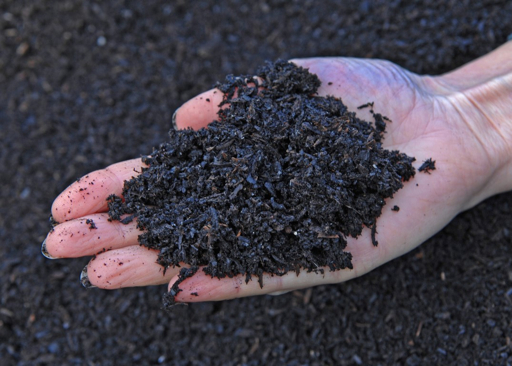
The spread of biochar To date, biochar – a charcoal-like product made by heating organic waste materials without oxygen – has taken a small, experimental shape on farms and is beginning to expand into national climate and agriculture plans. But progress varies: Countries with carbon markets, financing and farmer education are scaling up more rapidly than others.
Biochar benefits
Biochar, created from crop waste, rice husks, wood scraps and other biomass, can boost the amount of water and nutrients that the soil can hold, while sequestering carbon. Studies indicate potential applications outside of agriculture, such as pollution cleanup and low-carbon building materials.
It could tackle all kinds of issues simultaneously: create a market for ag waste, boost soil health, generate income in rural areas, and provide verifiable carbon removal. But experts warn it will only work where soils are right, feedstock is abundant, production is high quality, and farmers can afford it.
Africa: train the farmers first
A number of African countries are exploring the use of biochar to improve soil degradation and reduce fertiliser costs. In Kenya, farmers are trained through the Biochar for Sustainable Soils project to produce biochar from maize cobs, which has been shown to reduce fertiliser costs and increase cocoa yields.
While Tanzania’s priorities centered around farmer training (training 600 smallholders) Nigeria’s Biochar Africa is taking rice husks and transforming them into biochar briquettes for cooking stoves – connecting soil health with cleaner energy.
At the core of the policy conundrum is scale. Biochar should be integrated into countries’ climate commitments and carbon-credit schemes, and into grant-, microloan- and gender- and youth-led enterprises. One idea is to divert part of existing synthetic fertiliser subsidies into biochar starter packs for smallholders.
Europe: rules and carbon markets
The EU has leaned toward a regulatory approach. The EU 2024 Carbon Removal Certification Framework establishes a set of common requirements for climate-effective, permanent carbon removals (including biochar), to help producers demonstrate the climate benefits of their products and capture carbon market opportunities.
Biochar is also making its way into buildings and the wider built environment. Industry groups are trialling its use in concrete, cement and asphalt as a way to lock carbon into the materials used in construction rather than solely in farmland.
Asia: Credits and national missions
Japan is one of the most obvious cases of policy-supported adoption. Credits are given for on-farm use of biochar through Japan’s J-Credit scheme, which is bolstered by ministry programmes and Japan’s Environment Innovation Strategy.
The country has merged its research capacity with business and put pilot projects in regions where most crops are grown. A similar system in India, India has the Soil Health Card scheme and the National Mission for Sustainable Agriculture that are sustainable-agriculture initiatives that would dovetail with biochar, but no specific policy for biochar.
By 2030, Taiwan aims to have removed a million tonnes of carbon dioxide equivalent per year through biochar. Its plan involves establishing certification and trading systems aligned with international standards, green finance, and greater application of biochar in soils and construction.
The implementation gap
A group of policy instruments for government support consists of three categories, including financial instruments (lending guarantee, and operational subsidy), nonfinancial instruments (regulatory and promotional measures), and research and development (demonstration project).
Vietnam is more specific, with a strategy for biochar that involves projects to use organic fertilisers and national standards to promote biochar as a soil additive. Norway’s biochar use is more likely to be indirect. A tax on mineral fertilisers could incentivise biochar while helping to fund green investments.
In Kenya and Colombia, two very different pathways to biochar – Kenya’s clean-cooking programs and Colombia’s research-led soil restoration pilots – brought the two groups together. The researchers’ finding is blunt: replicating a model from one country elsewhere can lead to the wrong incentives and climate opportunities missed.
What comes next?
For biochar to leapfrog the pilot stage, governments will have to link four elements: standards, farmer training, finance and trustworthy carbon accounting. Otherwise, it will remain a promising technology kept confined to demo plots.
The feeling growing among experts is that biochar is not a panacea. However, where it is tailored to local farming practices and has supportive policies behind it, it may be one of the more straightforward options to convert farm waste into climate solutions.
References:
Nature: “Can biochar rescue Africa’s soils and its crops?” 18 September 2025
Agricultural and Resource Economics Review: “Policy and cost analysis for biochar development: A global review and Northeast US case study.” 13 October 2026
Biochar International: “Biochar as a Diversified Carbon Dioxide Removal Pathway: Research and Technology Integration Update 2023–2025.” 26 January 2026
CNEWS: “Taiwan’s biochar carbon removal strategy targets one million tonnes annually by 2030.” 2 October 2026
Biochar Europe: “Biochar in low-carbon construction materials.” No date
Stockholm Environment Institute: “Biochar can support climate action, but only if it starts from local realities.” 9 March 2026
Sustainable Environment Research: “Biochar application as a green clean-up method: Bibliometric analysis.” 17 June 2025
Discover Sustainability: “Bibliometric analysis of trends in biochar research and applications.” 27 May 2026
Energy Strategy Reviews: “From waste to resilience: A circular biochar framework for climate-resilient agriculture in Africa.” 2 February 2026