
What is Biochar?: Why Countries Are Betting on it

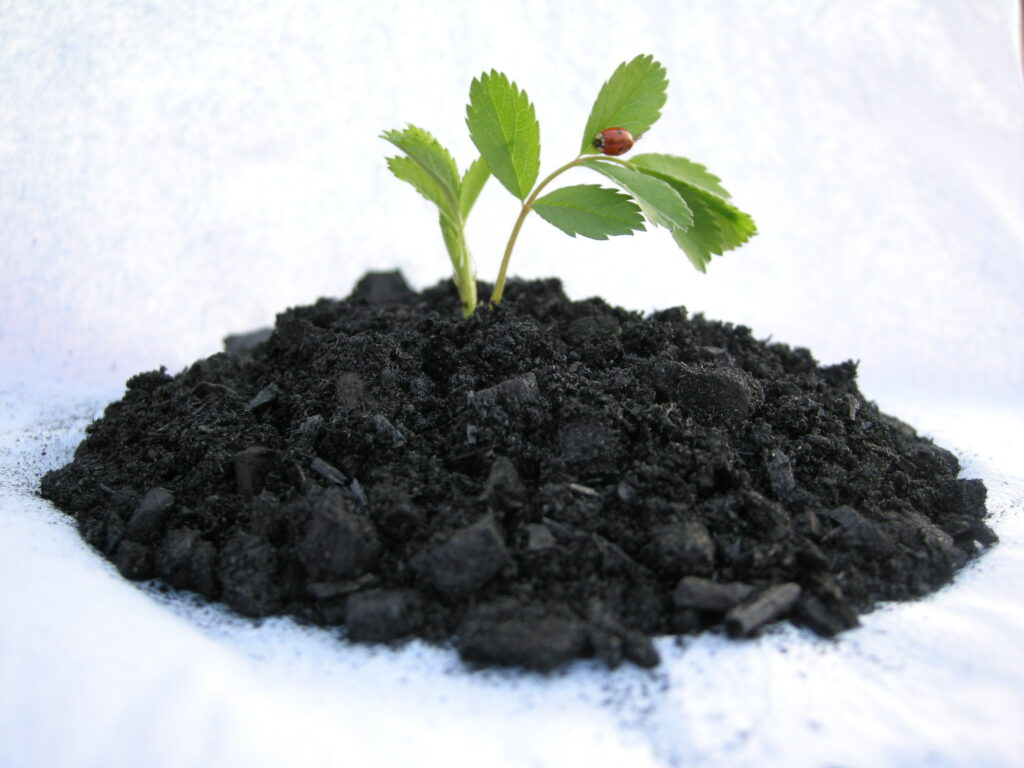
With countries competing to reach net zero in the coming decades, biochar is emerging as an increasingly popular substance. It is a form of charcoal created by applying high temperatures to biomass, such as crop waste, wood debris or manure, in an environment with minimal oxygen.
How it works: It’s straight-forward: during photosynthesis, plants take up CO2 as they grow. If they are burned, decay, or discarded, most of the carbon stored in the crop will ultimately return to the atmosphere. When biomass is turned into biochar-a carbon-rich substance created by pyrolysis, where the biomass is heated with limited to no oxygen-some of that carbon becomes resilient and, if put into use as a building material or applied to soil, will remain stored for much longer.
It has resulted in biochar becoming one of the most rapidly expanding carbon removal options available in voluntary markets. Biochar also has the advantage that, unlike many emerging technologies, for example direct air capture, it can be produced from current agricultural and forestry waste. If incorporated into the ground, it might also deliver benefits for farmers such as increased soil water retention, stability and nutrient availability, relative to the state of the preexisting soil.
Why countries are interested?
Governments view biochar as not only a climate solution. It could also resolve many issues through one solution: agricultural waste, open-field burning, soil impoverishment, incomes in rural communities and carbon emissions.
The potential is particularly large for countries with sizeable agricultural sectors. On top of saving space, crop by-products like rice husks, sugarcane bagasse, maize and cotton stalks and forestry waste could be gathered up and utilized rather than left to rot or be burned in the open, which is particularly common in some countries like India, where crop-residue burning is a major source of seasonal air pollution in many states.
Across 155 countries in a global assessment, the scientists estimated that the sustainably available biomass residues could enable biochar to sequester an amount equivalent to around 6.23% of global greenhouse-gas emissions. Out of these 155 countries, in 28 it was estimated to be over 10%.
Don’t think that means biochar is going to single-handedly save us from climate change, either. It’s not an alternative to the necessary rapid decarbonisation of energy production. But it could play a useful part in removing ‘residual emissions’ – those stubborn emissions that are hard to fully prevent in sectors like cement, aviation, agriculture and heavy industry.
Carbon markets are accelerating the trend
Biochar is becoming popular for another reason: Companies want carbon credits for carbon they’ve actually pulled out of the atmosphere. Offset projects in the past, especially tree-planting schemes, have been scrutinized for how permanent the forests are going to be. Wildfires, droughts, disease and logging can unleash sequestered carbon into the sky.
Biochar has been attractive because it is possible that some or all of its carbon may be more stable than carbon stored in live plants. Properly produced and applied, it can persist for centuries in soil. This has helped biomass-based removal credits, notably biochar credits, garner investment from companies looking for higher-quality carbon-removal claims.
Biochar companies have also sold biochar-based carbon-removal credits to corporate buyers such as Microsoft and Shopify. They may be simpler for investors to evaluate than some nature-based offset projects because investors can record where the feedstock was sourced, how the biochar was made and how it was used.
The country has also set a target to eliminate 1 million tonnes of carbon dioxide equivalent of biochar every year by 2030. Taiwan aims to convert crop waste – such as bananas or pineapples – into a climate resource rather than an item to be discarded.
The hope for India
India is well-placed to scale-up biochar because of its large agricultural economy and correspondingly vast supply of crop residues. Major crops in India-wheat, rice, maize, cotton and sugarcane-produce biomass that can be valuable when used to make biochar.
A well-managed biochar system can also ease the need to burn crop residues, encourage soil-health approaches, and generate extra income streams for farmers, farmer-producer organisations and rural businesses. Small-scale pyrolysis equipment could be situated near farms to bring down the costs of moving bulky residues, while bigger facilities might cater for a collection of villages or farming zones.
Rural entrepreneurs may develop a full value chain: RESIDUE collection, CHARGE processing, CHARGE sales to farmers or horticulture companies, and a revenue stream from high-quality carbon-removal certificates. That’s why biochar is being promoted as much more than a climate technology, but part of a rural circular economy.
The risks and reality test
Biochar looks promising, but it can’t be taken for granted that it’s sustainable. It’s climate benefit depends where the biomass originated from, how the material is produced and what would have otherwise occurred to it.
Excluding too much crop residue from farms will be harmful to the soil health – in part because those residues are also the source of nutrients and organic matter that go back to the soil. So, biochar projects are simply going to have to find extra biomass and not make farmers giving away what they need for their land.
Production quality matters too. Pyrolysis that isn’t well managed can generate air pollution or biochar that contains toxins. Moving the residues to produce the biochar can also negate its potential for the climate if they are transported far from where they’re created. Carbon-credit schemes should consider all lifecycle emissions, not just the generated carbon.
Meanwhile, some companies may buy biochar credits as a pretext to avoid cutting their own direct emissions. Climate science and policy experts agree that carbon removal should be a small and secondary tool for addressing climate change, never a substitute for slashing coal, oil and gas.
A climate tool rooted in the soil
People are increasingly backing biochar because it provides a more tangible way of displacing some carbon, dealing with unwanted agricultural residues and possibly making soils better. It is not a silver bullet and its effectiveness will depend on robust standards for sustainable sourcing, clean production and transparent carbon bookkeeping.
However, for countries in search of near-term climate solutions, biochar offers a compelling option. It transforms farm waste into a long-lasting carbon sink, generates income for rural economies and provides governments with a new climate solution to add to their portfolio as they push to hit net zero targets.
References:
Reuters: “Analysis: Why biomass removals credits like biochar are luring investors” November 15, 2023
Reuters: “Biochar: the ‘black gold’ for soils that is getting big bets on offset markets” October 5, 2022
Springer Nature: “Biomass residue to carbon dioxide removal: Quantifying the global impact of biochar” December 8, 2023
National Institutes of Health, Environmental Health Perspectives: “Biochar: Carbon Mitigation from the Ground Up” May 2009
Newtalk News: “Towards 2050 net zero: Taiwan sets 2030 target of removing one million tonnes of biochar carbon annually” October 2, 2026