
Can India Save It’s Tigers Corridors?

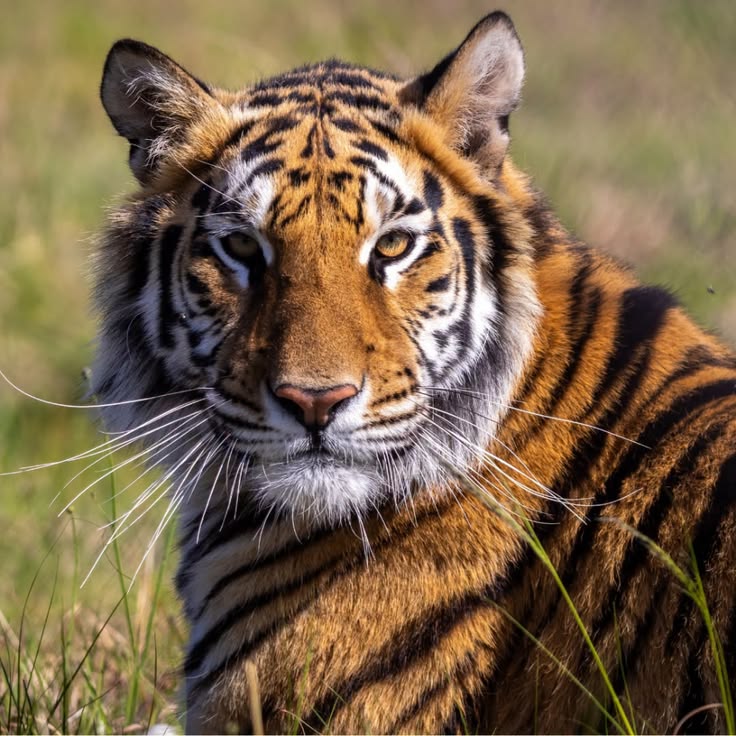
Tigers are increasing, yet their homes are vanishing.
India’s programme to protect its tigers-one of the most challenging environmental undertakings in modern times-has succeeded, raising the tiger population from an estimated 1,827 in 1972, to a colossal 3,682 in the 2022 census. And though over three-quarters of the planet’s wild tigers inhabit its protected habitats, India holds one last viable hope for the species.
But now the success has turned into another difficult question: where is the spiralling tiger population going?
For the country’s most famous tiger reserves like Ranthambhore, Panna and those within the Nilgiri ecosystem, are reaching their ecological limit. They are accommodating a very high number of tigers, while several other protected areas remain void of the feline. Other protected areas have either zero or a minimal population simply because they cannot find prey, support protection or offer the chance of genetic exchange-all critical factors if one is to conserve tigers.
The state has been made to identify 25 reserves where interventions are being prioritised and should receive immediate attention.
The state has identified 25 reserves where it intends to implement timely interventions in their habitats, prey base, and if feasible, the reintroduction of tigers.
So it is not a matter of scarcity of Tigers or of the number of forests now designated for the purpose. The gap between these two entities is widening at an alarming rate.
Corridors are the arteries of the ecosystem
The connection of protected spaces across landscape is referred to as tiger corridor. These are not defined thin strips on a map but entire landscapes consisting of riverbanks, forest tracts, shrublands, agricultural farms, river systems-and basically all spaces inhabited by humans in general, where tiger roam freely.
Such routes act like corridors or pathways; young, dispersing male tigers, especially, venture out of their birth range to form their own territories and are therefore crucial to enable migration, hunting for prey, access to water bodies and crucially, to facilitate genetic flow between populations separated geographically, preventing extreme genetic depletion, local extinction, intra-specific killing and territorial disputes. The Terai Arc Landscape which lies alongside the foothills of the Himalayas, within India and the Nepalese border, exemplifies a case in point for the effectiveness of such system. Out of its 19 corridors, 10 urgently require help from the agencies.
Similarly, for the Central Indian landscape, Kanha-Pench Corridor bridges two major tiger habitats by allowing it to move around and breed between two major parks.
Currently, nearly 35% of the tiger population in the country live outside its boundaries, implying that future survival depends heavily on connecting corridors outside those parks too.
Human intervention is shrinking corridors
One of the foremost threats that restrict animal movement is India’s expanding infrastructure, particularly its vast railway network and the construction of high-ways; construction of canals, mining projects and the urbanisation pose some of the significant challenges. Each of these interventions, be it mining, a major road network, mining tunnel, water canals, etc-can carve up the landscape and its interconnectedness. In such spaces human-tiger conflict has begun to spike leading to human deaths during crossings due to trains or other vehicles, poisoned bait or traps, etc.
Chandrapur district in Maharashtra alone, which is a habitat for Tadoba-Andhari Tiger Reserve, has reported high numbers of increase for tigers, as well as in industrial andmining centres located there alongside substantial human inhabitants.
In one particular stretch, there have been reported 150 human deaths and 19 tigers killed in trains since 2021-an issue indicating the gravity of these interventions carving up wildlife corridors. Another massive problem is that of proposed mining project in Gadchiroli, which stands to damage near about 9.4 sq. Kilometres of forests in an important tiger corridor; moreover Ken-Betwa river interlinkage project would drown 57 sq. Kms of forests that is now part of Panna Tiger Reserve and displace entire human habitats located there too.
One of the glaring contradictory realities of India’s conservation story is the way India’s development agenda runs ahead of conservation concerns by creating corridors for animals and at the same time destroying the landscapes the corridors are meant to connect.
Engineering efforts can go a long way in bridging the gaps in corridors, but they are no substitute for the habitat itself. India’s successful endeavors, like providing Asia’s longest wildlife underpasses and overpasses under the Delhi-Dehradun highway (which has been recently used by many of its animal dwellers like Elephants, Leaps, deer and antelopes), have not only proven effective in alleviating human-tiger conflict, but they also provide crucial avenues for wildlife to move around and expand territories in its region. Pench landscape along National Highway 44 recorded as many as 18 species and 11 animals, including tigers, crossing its 9 wildlife underpasses each.
But all this engineering prowess is useful as long as the habitats exist.
There is nothing much that an overpass can do once a forest has been destroyed, prey base lost and corridors are deemedunsafe; therefore, preventing any detrimental damage to such ecologically sensitive regions by foregoing a damaging project rather than developing mitigation strategies later, would serve both conservation and human interests better. Furthermore, the pattern of wildlife movement is unpredictable and an official map alone will not dictate where wildlife travels – in human-dominated landscapes they can traverse through fields, shrublands, rivers or small patch of forests too. Therefore whole connected habitats, not thin strips must be put into the planning blueprint.
The human factor
It is not only about wildlife but it is also about accommodating a large predator in close proximity to humans. Wildlife, tigers moving through village premises, animal farms, etc-encounter with domestic animals could lead to a surge in such conflicts, which result in destruction of crops and livestock as well as injuries to humans. Human retaliation involving illegal methods such as use of electric fences, poison or hunting, naturally escalates the situation and becomes part of the human-tiger cycle.
Thus, wildlife-human conflict is being handled as an emergency, not a manifestation of Habitat fragmentation.
The real solution is if human communities can depend on the bounty provided by sufficient prey based habitats leading to displacement of conflict-associated behaviour to protect livestock and proximity to human habitation. So adequate provision of Compensation, establishment of effective early-warning system, professional assistance for trained and designated response teams, participation of the community in corridor management are essential. Further there are obvious community benefits from such conservation initiatives, as communities have to bear the brunt with fewer advantages when humans themselves are so closely dependent on, and associated with animals like Tigers; people dependent on these habitats also require livelihood opportunities beyond resource extraction, financial assistance, and the agency in defining such corridor management process.
Will India be successful in saving its corridors?
For success, it is of prime importance to redefine India’s strategy of assessing the success. Although a population statistic is necessary it will not indicate the inter-connectedness of wildlife or the abundance of their prey-and importantly, safe passage between varied habitats. There is the urgent need of the 5 prong approach:
1. Protect the essential habitats of the Tigers at all costs.
2. Work towards legal securing of corridor routes and its regeneration over state lines.
3. Plan the infrastructure, roads and rails for the animals before construction worksbegin.
4. Enhance the population of the prey base, while rehabilitating degraded forestland in areas lacking tigers.
5. Develop community centric support like compensation to victims and the rural folks involved in conservation linked livelihood initiatives, alongside providing effective support to prevent and resolve human-tiger conflict.
Wildlife conservation in India and especially for the Tiger has reached a very commendable height. But the sheer population of animals residing in the country’s protected habitats, require ample space to roam and hunt. For tigers that are far from abundant, the very nature of how India defines success is going to determine the future; can a young Tiger find suitable habitat when he moves out of his territory, or will he become just another casualty due to poor infrastructure, trap or a village? Preserving tiger means that in future wildlife must find a safe corridor beyond designated national parks as well in order for humans and wildlife to coexist as an Indian economy scales new heights.
References: –
– Mongabay-India: “India’s rising tiger population and the need to protect ecological corridors.”
– The Indian Express: “Government roadmap for restoring 25 struggling tiger reserves.”
– Firstpost: “India’s tiger recovery and the challenge of protecting habitats and corridors.”
– Mongabay-India: “Protecting passageways for India’s growing tiger populations.”
– Frontiers in Ecology and Evolution: “Options for conserving tiger corridors beyond designated protected areas in India.”
– Times of India: “Why corridors are more important than tiger translocation for reducing pressure on reserves.”
– Down To Earth: “Problems with a numbers-focused approach to tiger conservation.”