
Microplastics in the Brahmaputra: The Pollution We Can’t See

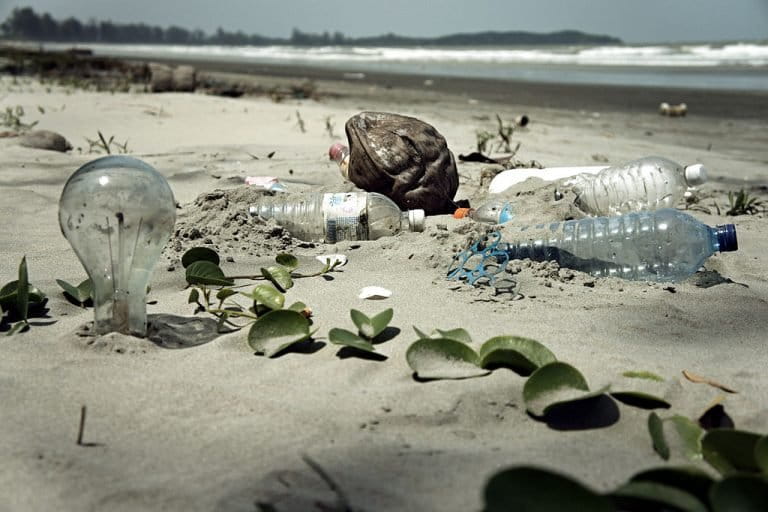
The Brahmaputra River of Northeast India is experiencing a pervasive and hard to perceive environmental hazard. Tiny fragments of plastic are accumulating on the banks of the river and can leach into its waters, sediments, and the wider food web.
A recent project undertaken by Professor Vimal Katiyar and the research team at Indian Institute of Technology Guwahati, sponsored by North Eastern Development Finance Corporation Limited (NEDFi), revealed the contamination of the Brahmaputra’s shoreline with microplastics. Samples collected across over 20 locations, which included residential, rural, industrial, sewage treatment, and airport areas, were analyzed.
A hidden form of pollution
Microplastics are plastic materials that are less than 5 millimeters in size. They originate from the degradation of larger plastic items, such as grocery bags, bottles, packing material, and fishing gear. They also arise from industrial manufacturing discharges, synthetic clothing fibers that shed during the washing process, tire wear, and untreated wastewater.
Unlike easily visible plastic waste, microplastics are mobile in water, and their tiny size can allow them to settle into riverbed sediments, to be ingested by aquatic life and transported into food webs.
The IIT Guwahati-NEDFi research has detected fragmented plastics like polyethylene, polypropylene, and PVC along the river’s shoreline-identified using microscopy and Fourier-transform infrared spectroscopy.
Multiple sources
Sources of microplastic pollution on the Brahmaputra are varied. Runoff in populated areas carries packaging material from street refuse, and rainfall flushes it into the river. Industrial wastewater and sewage treatment plants also release untreated plastic waste in liquid form. Hydrological factors, such as fluctuations in water levels caused by floods, as well as river flow patterns, contribute to the widespread dispersion of these contaminants throughout the river basin.
The sites included in the study were specifically selected based on locations subject to input from the general public and industry, wastewater treatment facilities, and an airport. This pattern of contamination may not be due to isolated events but, rather, due to overall human activity affecting the river.
Risks to biodiversity
The life within the Brahmaputra, comprising a multitude of fish species, birds, and other aquatic organisms as well as communities dependent on it for food, transport, and sustenance, is threatened. When aquatic organisms mistake microplastics for food-as they often do-these particles can trigger physical damage within the organisms and serve as a medium on which harmful chemical contaminants or additives adhere and are absorbed.
A separate evaluation conducted in 2026 on water, sediments, and native fish of the Brahmaputra found microplastic levels of 140-420 particles per cubic meter in water, 13.63-53.33 particles per kilogram of sediment, and 1-5.33 particles per fish. Higher ecological risk factors were observed from a group of polymers, including polyurethane, PVC, PET, and polystyrene, although not directly indicative of human health risk through fish consumption. Nevertheless, it is clear that the organisms within this environment are contaminated, and the impact on human health remains a subject for continued study.
From detection to remediation
Possible solutions in the context of microplastic mitigation were also investigated in this NEDFi-assisted project, as it explored the use of boom barriers to collect plastic floating materials and biofilm-assisted remediation strategies that might allow microbial communities to break down pollutants on these floating plastic sites.
Reports on the project suggest that the policy recommendations made focused on continuous monitoring, shore maintenance, preventing pollution entry into the environment, and ecological protection. The need to address all aspects of plastic waste management, including preventing release into aquatic ecosystems and actively removing waste already in the river and on shores, was underlined by participants in the report and officials involved in its dissemination.
A wider river-basin problem
As the Brahmaputra is part of the greater Ganges-Brahmaputra-Meghna river basin, any pollution here is systemic. Studies conducted previously in the lower basin had predicted, as early as 2025, microplastic concentrations from 1.53-8.13 particles per liter during dry months and 2.67-7.67 during monsoons. The most common particle shape found was fiber-like, with numerous blue fragments detected, composed primarily of rayon and polyethylene.
The most menacing quality about microplastic pollution is its subtle persistence and visibility. Long before plastic waste degrades to become microscopic, it may be thoroughly disseminated through both water and living organisms in a manner that is difficult to detect. Protecting the Brahmaputra thus demands the simultaneous application of plastic waste remediation techniques coupled with aggressive plastic prevention and management strategies that address every facet of plastic production, use, collection and disposal.
References:
– Economic Times:“NEDFi study finds microplastic pollution threatens Brahmaputra”August 14, 2026
– The Sentinel:“NEDFi report on microplastic remediation on Brahmaputra’s shores released at IITG”August 15, 2026
– PubMed / Journal of Contaminant Hydrology:“Spatio-temporal dynamics and flux of microplastics in the lower Ganges-Brahmaputra-Meghna River system and estuary”December 24, 2025
– LinkedIn (Dr Rakesh Kumar):“Ecological risk assessment of microplastics contamination in water, sediment and native fish species of the Brahmaputra River, India”April 10, 2026