
The Rare Earth Crisis: The Hidden Environmental Cost Behind Electric Vehicles, Smartphones and the Green Energy Revolution

The world is entering an unprecedented technological transition.
Electric vehicles are replacing internal combustion engines. Solar panels and wind turbines are expanding rapidly. Artificial Intelligence is transforming industries, and billions of people carry increasingly powerful smartphones in their pockets.
Collectively, these technologies are presented as the foundation of a cleaner and more sustainable future.
Yet behind this green transition lies an environmental reality that receives remarkably little public attention.
Every electric vehicle, wind turbine, battery storage system, solar inverter, smartphone, and AI server depends upon minerals extracted from the Earth.
Lithium.
Cobalt.
Nickel.
Graphite.
Copper.
Rare Earth Elements.
These materials are becoming the backbone of the global clean-energy economy.
The environmental question is therefore no longer whether we can replace fossil fuels.
It is whether we can build a green economy without creating a new generation of ecological challenges through unsustainable mining.
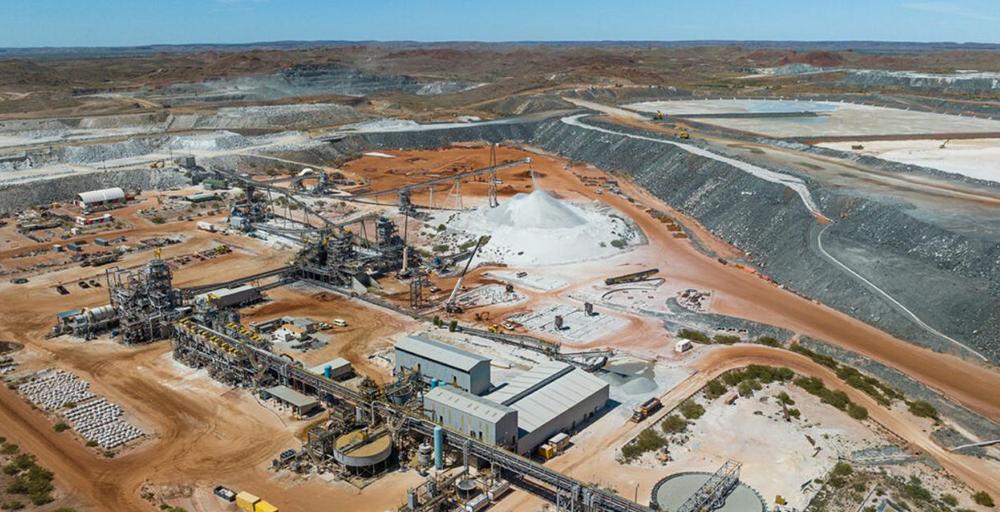
The Green Revolution Begins Underground
Modern technology appears clean because most of its environmental footprint remains invisible.
Consumers see electric vehicles driving quietly through cities.
They do not see the mines producing lithium.
People admire wind farms.
Few consider the rare earth magnets required inside every turbine.
Artificial Intelligence feels digital.
Yet every AI processor begins as minerals extracted from landscapes that were once forests, grasslands, or mountains.
The transition toward clean technology is therefore also a transition toward greater mineral dependence.
Why These Minerals Matter
Critical minerals possess unique physical and chemical properties that make modern technology possible.
Lithium stores electrical energy efficiently.
Cobalt improves battery stability.
Nickel increases energy density.
Copper enables electricity transmission.
Rare earth elements allow high-performance electric motors and wind turbine generators to operate efficiently.
Without these materials, the global energy transition would slow dramatically.
Their importance is expected to grow significantly over the coming decades.
The Environmental Cost of Mining
Mining remains one of humanity’s most resource-intensive industries.
Large-scale extraction may involve:
- Clearing forests.
- Removing fertile topsoil.
- Consuming significant quantities of freshwater.
- Producing mine waste.
- Disturbing wildlife habitats.
- Generating dust and air pollution.
The severity of these impacts varies depending on local geology, environmental regulations, mining practices, and rehabilitation efforts.
The challenge is not the existence of mining itself.
The challenge is ensuring that the materials required for sustainability are extracted responsibly.
From Oil Dependency to Mineral Dependency
For decades, global economies relied heavily on petroleum.
The clean-energy transition aims to reduce that dependence.
However, replacing one resource dependency with another is not necessarily a complete solution.
Future energy security will increasingly depend upon secure, ethical, and environmentally responsible supply chains for critical minerals.
Diversification, recycling, and innovation will become as important as extraction itself.
The Circular Opportunity
Unlike fossil fuels, many critical minerals can be recovered and reused.
Batteries, electronics, electric motors, and renewable energy equipment contain valuable materials that should not become waste.
Urban mining—the recovery of valuable minerals from discarded electronic products—may become one of the most important industries of the coming decades.
The cleanest mine may eventually be the one that already exists inside our electronic waste.
HFN Solution Framework
Heavendoo Foundation believes the future of clean technology must also become the future of responsible resource management.
Environmental sustainability should extend beyond reducing emissions.
It must include ethical sourcing, circular material flows, biodiversity protection, and ecological restoration.
Short-Term
- Publish educational resources explaining critical minerals and their environmental significance.
- Promote responsible electronic waste collection and recycling.
- Raise public awareness about the hidden material footprint of modern technology.
Medium-Term
- Develop HFN Critical Mineral Impact Studies evaluating environmental trade-offs associated with emerging technologies.
- Promote partnerships supporting responsible battery recycling and material recovery.
- Encourage lifecycle assessments for renewable energy infrastructure.
Long-Term
- Launch the HFN Critical Minerals Sustainability Index measuring environmental performance across mining, manufacturing, recycling, and restoration.
- Support AI-driven urban mining systems capable of identifying recoverable materials from electronic waste streams.
- Advocate policies encouraging closed-loop material systems where valuable minerals remain in continuous circulation rather than being discarded.
HFN Vision 2040
Heavendoo envisions a future where the green economy is built not only on renewable energy but also on responsible resource stewardship.
Every battery should eventually become the raw material for another battery.
Every electronic device should become part of a circular resource system.
Every mining project should include measurable ecological restoration commitments.
Clean technology should never come at the cost of permanently damaged ecosystems.
HFN Observation
“A sustainable future cannot be built by solving one environmental crisis while silently creating another beneath the surface.”
The energy transition is essential.
But the success of that transition will ultimately depend on whether humanity can obtain the resources it needs without compromising the ecosystems it seeks to protect.
HFN Research Questions
- Should every electric vehicle and battery carry a publicly available material footprint alongside its carbon footprint?
- Can urban mining eventually reduce the need for new mineral extraction?
- How can AI, satellite monitoring, and environmental restoration improve transparency and accountability in the critical minerals supply chain?
- Should ecological restoration become a mandatory legal requirement for every major mining project?