
Planetary Boundaries: Have We Already Crossed Earth’s Safe Operating Limits?

For decades, environmental debates have focused on individual crises.
One year the world worries about climate change.
The next year it discusses plastic pollution.
Another year, water scarcity dominates international headlines.
Each issue appears separate.
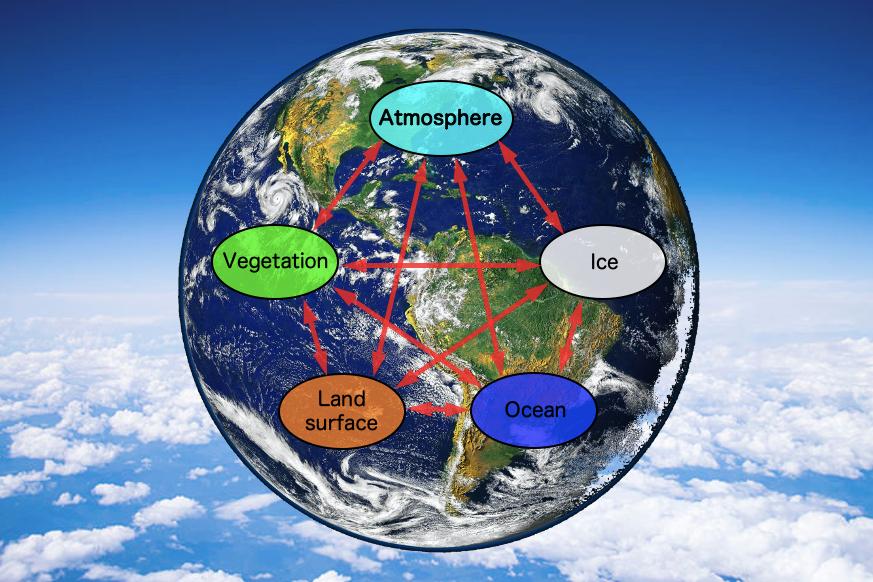
In reality, they are deeply interconnected.
Earth does not function through isolated environmental systems. Forests influence rainfall. Oceans regulate climate. Healthy soils store carbon. Biodiversity maintains ecosystem stability. Freshwater sustains agriculture. Atmospheric chemistry shapes life itself.
When one system begins to fail, others often become increasingly vulnerable.
Recognising this interconnectedness, a group of Earth-system scientists introduced one of the most influential environmental frameworks of the twenty-first century: Planetary Boundaries.
The idea is both simple and profound.
Our planet has environmental limits.
Crossing them increases the risk of destabilising the natural systems upon which human civilisation depends.
Earth Has Operating Limits
Modern economies often assume that natural resources can continue supporting unlimited growth.
However, ecological systems operate within physical and biological thresholds.
Planetary Boundaries describe these thresholds as the “safe operating space” for humanity.
They do not represent the exact point of environmental collapse.
Instead, they indicate the range within which Earth’s life-support systems are most likely to remain stable.
Moving beyond these boundaries increases uncertainty and ecological risk.
The Nine Planetary Boundaries
Scientists have identified nine major Earth-system processes that regulate the stability of the planet:
- Climate Change
- Biosphere Integrity (Biodiversity)
- Land-System Change
- Freshwater Change
- Biogeochemical Flows (Nitrogen and Phosphorus)
- Ocean Acidification
- Atmospheric Aerosol Loading
- Novel Entities (Synthetic Chemicals, Plastics and Other Human-Made Substances)
- Stratospheric Ozone Depletion
These boundaries are interconnected.
Pressure on one often amplifies stress on others.
For example, deforestation contributes to biodiversity loss, alters rainfall patterns, affects freshwater systems, and increases atmospheric carbon emissions simultaneously.
Why This Framework Matters
Environmental discussions often focus on solving one problem at a time.
Planetary Boundaries encourage a systems perspective.
A policy designed to reduce carbon emissions should not unintentionally increase freshwater depletion.
A renewable energy transition should not accelerate biodiversity loss through unsustainable mining.
Food production should not compromise soil health for short-term gains.
The framework reminds decision-makers that sustainability requires balancing multiple Earth systems simultaneously.
Measuring Progress Differently
Economic development has traditionally been measured using indicators such as GDP, industrial output, and infrastructure growth.
While these metrics remain important, they reveal little about ecological resilience.
Future societies may need additional indicators that measure:
- Ecosystem health
- Groundwater security
- Biodiversity recovery
- Soil organic carbon
- Urban green cover
- Circular material use
Prosperity should increasingly be evaluated not only by economic expansion, but by the health of the natural systems supporting that expansion.
The Cost of Ignoring Ecological Limits
History demonstrates that civilisations decline when natural systems deteriorate.
Water scarcity reduces agricultural productivity.
Soil degradation weakens food security.
Biodiversity loss disrupts ecosystem stability.
Climate extremes increase disaster risks.
These challenges do not occur independently.
They reinforce one another.
Ignoring ecological boundaries therefore creates risks that extend far beyond environmental conservation.
They affect public health, economic stability, national security, and future development.
HFN Solution Framework
Heavendoo Foundation believes environmental decision-making should move from isolated interventions to integrated Earth-system thinking.
Protecting a single ecosystem is valuable.
Protecting the interactions between ecosystems is essential.
Short-Term
- Develop public awareness programmes explaining Planetary Boundaries in simple language.
- Encourage schools and universities to introduce Earth-system science into environmental education.
- Publish educational infographics showing how different environmental crises are interconnected.
Medium-Term
- Create the HFN Earth Systems Dashboard, tracking regional indicators such as biodiversity, groundwater, tree cover, soil health, air quality, and waste generation.
- Collaborate with academic institutions to analyse local ecological risks using systems-based approaches.
- Promote interdisciplinary environmental planning across communities.
Long-Term
- Launch the HFN Planetary Health Index, combining ecological, social, and climate indicators into a single public reporting framework.
- Develop AI-powered Earth-system models integrating satellite imagery, environmental monitoring, and citizen science data.
- Support policy recommendations encouraging environmental planning based on ecological thresholds rather than isolated sectoral targets.
HFN Vision 2040
Heavendoo envisions a future where environmental planning is no longer fragmented.
Cities, businesses, schools, and governments should understand that forests, freshwater, biodiversity, soils, climate, and human well-being are parts of one interconnected living system.
The goal is not merely to solve environmental problems individually.
It is to keep the entire Earth system healthy enough to continue supporting life for generations to come.
HFN Observation
“Humanity has become remarkably skilled at measuring economic growth. The next century will depend on whether we become equally skilled at measuring the ecological limits that make that growth possible.”
The greatest environmental challenge is not simply crossing one planetary boundary.
It is failing to recognise that every boundary is connected to the others.
HFN Research Questions
- Should national development plans be evaluated against ecological boundaries alongside economic targets?
- Can every city create its own Earth Systems Dashboard to monitor environmental resilience?
- How can AI, satellite monitoring, and citizen science help measure planetary health at local and regional scales?
- What new indicators should define prosperity in the twenty-first century beyond GDP alone?