
The Light Pollution Crisis: How Artificial Light is Disrupting Nature After Sunset

For thousands of years, life on Earth evolved around a simple rhythm—the cycle of day and night.
Sunrise signaled activity. Sunset brought darkness, allowing ecosystems to rest, recover, and function naturally. Today, however, this ancient rhythm is being rapidly disrupted.
Modern cities never truly sleep.
Streetlights, illuminated buildings, advertising billboards, stadium floodlights, and decorative lighting have transformed the night into an extension of the day. While artificial lighting has improved safety and economic activity, excessive and poorly designed lighting has created an environmental challenge that remains largely invisible to the public.
Scientists call this growing problem light pollution.
Unlike plastic waste or air pollution, light pollution leaves no visible waste behind. Yet its ecological consequences extend across entire ecosystems.
When Night Stops Being Night
Darkness is not empty space.
It is an essential environmental condition that countless species depend upon for survival.
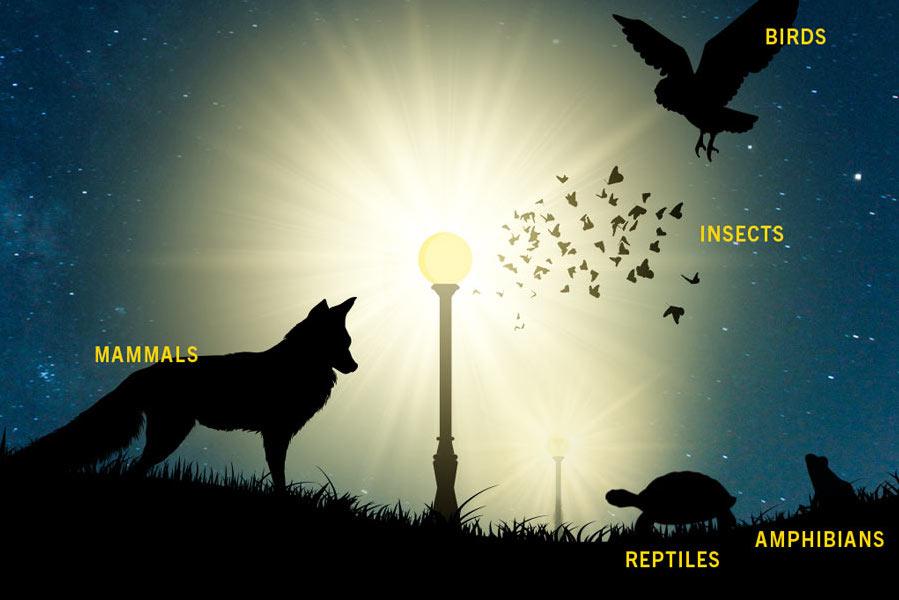
Many birds migrate using stars and moonlight. Nocturnal mammals search for food after sunset. Bats control insect populations during the night, while countless insects, including moths, perform critical pollination services under natural darkness.
Artificial lighting interferes with these natural behaviors.
Bright urban lighting can confuse migratory birds, attract insects away from natural habitats, alter predator-prey relationships, and disrupt breeding cycles across multiple species.
The result is an ecosystem that gradually loses its natural balance.
Human Health is Also Affected
Light pollution is not only a wildlife issue.
Humans also rely on natural light cycles.
Exposure to excessive artificial light during the night can disrupt circadian rhythms—the body’s internal biological clock that regulates sleep, hormone production, and overall health.
Late-night exposure to bright white or blue-rich lighting may reduce melatonin production, making quality sleep more difficult for many people.
As cities become brighter, protecting darkness is increasingly becoming a public health consideration as well as an environmental one.
The Energy We Never Needed to Waste
Not every light contributes to public safety.
Many buildings remain brightly illuminated long after working hours.
Commercial billboards operate throughout the night even in areas with minimal traffic.
Poorly designed streetlights often direct light upward instead of focusing illumination where it is actually needed.
This unnecessary lighting consumes electricity, increases operational costs, and indirectly contributes to greenhouse gas emissions where electricity generation still depends on fossil fuels.
Reducing light pollution is therefore also an opportunity to improve energy efficiency.
Rethinking Urban Lighting
The solution is not turning cities dark.
It is designing smarter lighting systems.
Practical measures include:
- Shielded streetlights that direct light downward.
- Motion-sensor lighting in low-traffic areas.
- Warm-coloured LED lighting with reduced blue light.
- Timed lighting for commercial buildings.
- Limiting unnecessary decorative illumination.
- Protecting designated dark-sky zones.
These approaches improve visibility while reducing ecological disturbance and energy waste.
HFN Solution Framework
Environmental conservation should not end when the sun sets.
Heavendoo envisions cities where lighting supports both human safety and ecological balance.
Future initiatives could include:
Short-Term
- Community awareness campaigns on responsible outdoor lighting.
- Light pollution mapping around schools, parks, and wetlands.
- Public audits of unnecessary nighttime lighting.
Medium-Term
- Smart lighting demonstrations using motion sensors.
- Partnerships with local authorities to improve streetlight design.
- Citizen-led “Dark Sky Nights” to measure changes in night-sky visibility.
Long-Term
- AI-powered urban lighting optimization.
- National light pollution monitoring maps.
- Dark-sky conservation zones integrated into urban planning.
- Environmental lighting standards for sustainable cities.
HFN Observation
“Human progress should illuminate our future—not erase the natural darkness that countless species depend upon.”
Protecting the night is not about switching off development. It is about recognising that darkness, like clean air and clean water, is a natural resource worthy of conservation.
HFN Research Questions
- Should light pollution become part of environmental impact assessments for new urban developments?
- Can Indian cities adopt dark-sky policies while maintaining public safety?
- How can smart lighting technologies reduce both ecological disturbance and electricity consumption?