
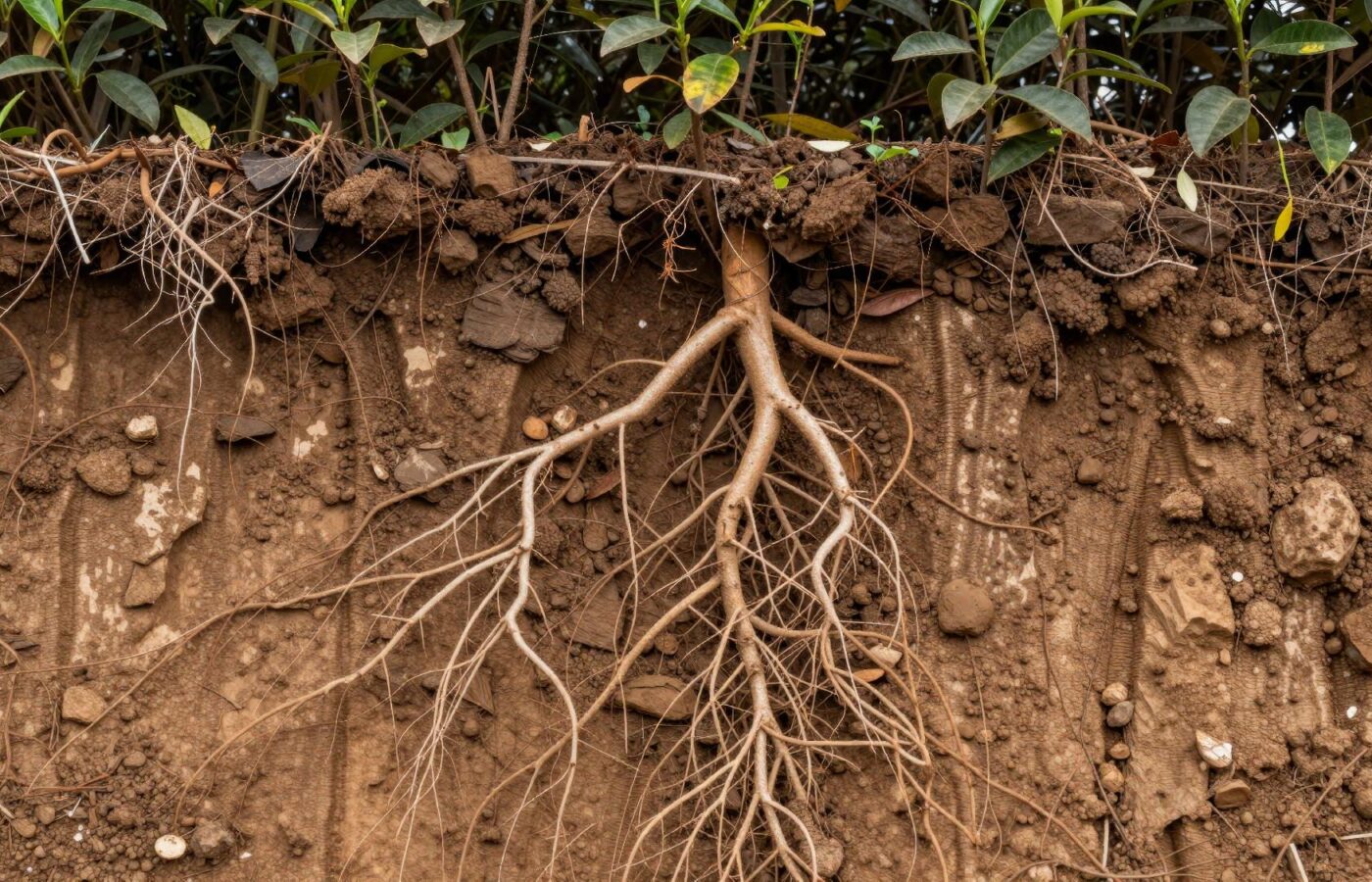
The Dying Soil Crisis: Why the Ground Beneath Our Feet is Losing the Ability to Sustain Life

When environmental issues are discussed, conversations usually revolve around climate change, plastic pollution, deforestation, or rising temperatures. Rarely do we stop to think about the ground we walk on every day.
Yet beneath our feet lies one of the planet’s most valuable and overlooked natural resources—soil.
Healthy soil is far more than dirt. It is a living ecosystem that supports forests, grows crops, filters water, stores carbon, and sustains nearly every form of terrestrial life. Without healthy soil, food security, biodiversity, and climate resilience all begin to collapse.
Despite its importance, soil degradation has become one of the fastest-growing environmental crises of the 21st century.
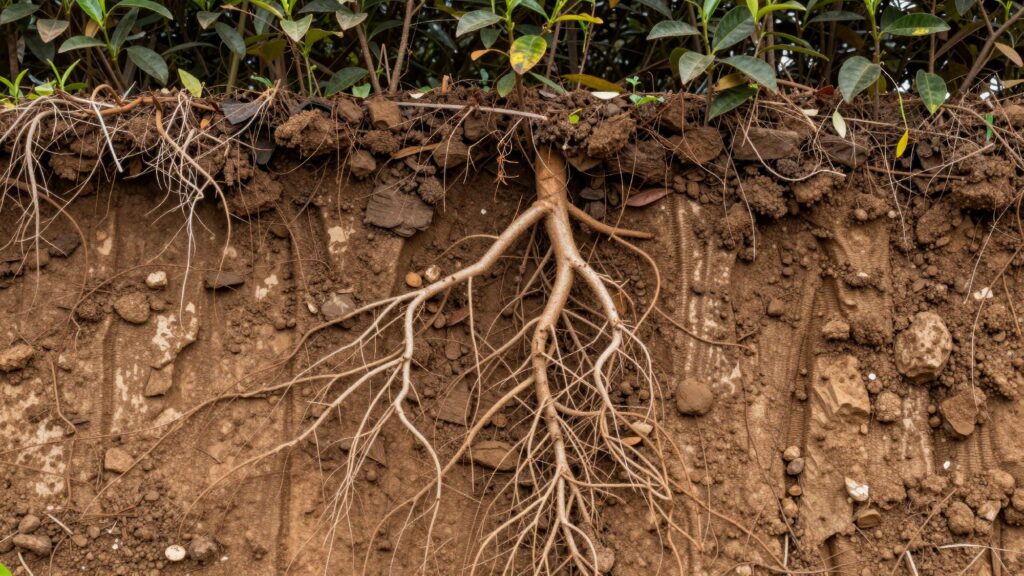
Soil Is Alive
To the naked eye, soil may appear lifeless.
In reality, a single handful of healthy soil contains billions of microorganisms, including bacteria, fungi, insects, earthworms, and other tiny organisms that work together to maintain ecosystem balance.
These organisms perform essential functions such as:
- Recycling dead organic matter into nutrients.
- Improving soil structure.
- Supporting plant root growth.
- Storing moisture.
- Capturing atmospheric carbon.
Healthy soil is therefore not an inert material—it is a living biological system.
The Global Soil Crisis
According to international environmental assessments, a significant portion of the world’s productive land has already been degraded due to unsustainable human activities.
Major causes include:
- Excessive use of chemical fertilizers.
- Deforestation.
- Overgrazing.
- Rapid urbanization.
- Unsustainable farming practices.
- Mining and industrial pollution.
Every year, fertile land loses valuable organic matter, becoming less capable of supporting crops and natural ecosystems.
Unlike many environmental resources, healthy topsoil forms extremely slowly. Nature may require hundreds of years to create just a few centimeters of fertile soil, while poor land management can destroy it within a single generation.
Why Soil Matters More Than We Realize
Nearly everything humans depend on begins with healthy soil.
It supports:
- Global food production.
- Forest ecosystems.
- Freshwater filtration.
- Wildlife habitats.
- Carbon storage.
- Climate regulation.
Scientists estimate that nearly 95% of the world’s food production depends directly or indirectly on healthy soil.
When soil deteriorates, agricultural productivity declines, biodiversity weakens, and communities become increasingly vulnerable to droughts and extreme weather.
Protecting soil is therefore not simply an agricultural issue—it is an environmental and economic necessity.
The Hidden Cost of Degraded Land
Soil degradation rarely attracts immediate public attention because its effects develop gradually.
However, the long-term consequences are profound.
As fertile soil disappears:
- Crop yields decline.
- Farmers require larger quantities of fertilizers.
- Water retention decreases.
- Dust storms become more frequent.
- Natural vegetation struggles to regenerate.
- Carbon stored in soil is released into the atmosphere.
What begins as soil degradation eventually contributes to food insecurity, biodiversity loss, and climate change.
Restoring the Foundation of Nature
Healthy soil can recover when protected through sustainable land management.
Solutions include:
- Increasing organic matter through composting.
- Reducing excessive chemical inputs.
- Protecting forests and grasslands.
- Preventing soil erosion.
- Promoting regenerative agriculture.
- Restoring degraded landscapes.
Healthy ecosystems begin with healthy soil.
Without restoring the ground beneath us, efforts to restore forests, improve biodiversity, or strengthen climate resilience will remain incomplete.
Looking Beyond the Surface
Modern society often measures environmental progress by what is visible—new plantations, cleaner rivers, or lower emissions.
Yet one of the greatest environmental battles is taking place underground.
The future of humanity will not depend only on the air above us or the water around us, but also on the living soil beneath our feet.
Protecting soil today means protecting the ecological foundation upon which future generations will depend.
HFN Observation
“Civilizations are not built on concrete—they are built on healthy soil. When the ground beneath us loses life, every ecosystem above it begins to weaken.”
The environmental movement has long focused on the sky, the oceans, and the forests. The next frontier of conservation must begin beneath our feet, where healthy soil quietly sustains life every single day.
HFN Research Questions
- Why does soil conservation receive far less public attention than climate change or plastic pollution?
- Should soil health become a national environmental indicator alongside air and water quality?
- Can restoring degraded soil become one of the most effective long-term climate solutions?