
The Disposal Fallacy: How Fast Fashion’s Compounding Waste is Suffocating Our Ecosystems

The modern consumer wardrobe has turned into a high-speed transit zone. Driven by hyper-accelerated trend cycles, clothing production doubled between 2000 and 2015, while the average lifespan of a garment dropped by a staggering 36%.
Once a micro-trend dies, millions of garments are immediately discarded. This creates an “out of sight, out of mind” illusion—a psychological trick where consumers feel the problem is solved simply because their trash is collected. In reality, this is where a dangerous compounding crisis begins. Humanity now generates 92 million tonnes of textile waste every year, which is the ecological equivalent of a full garbage truck of clothing being dumped into a landfill every single second.
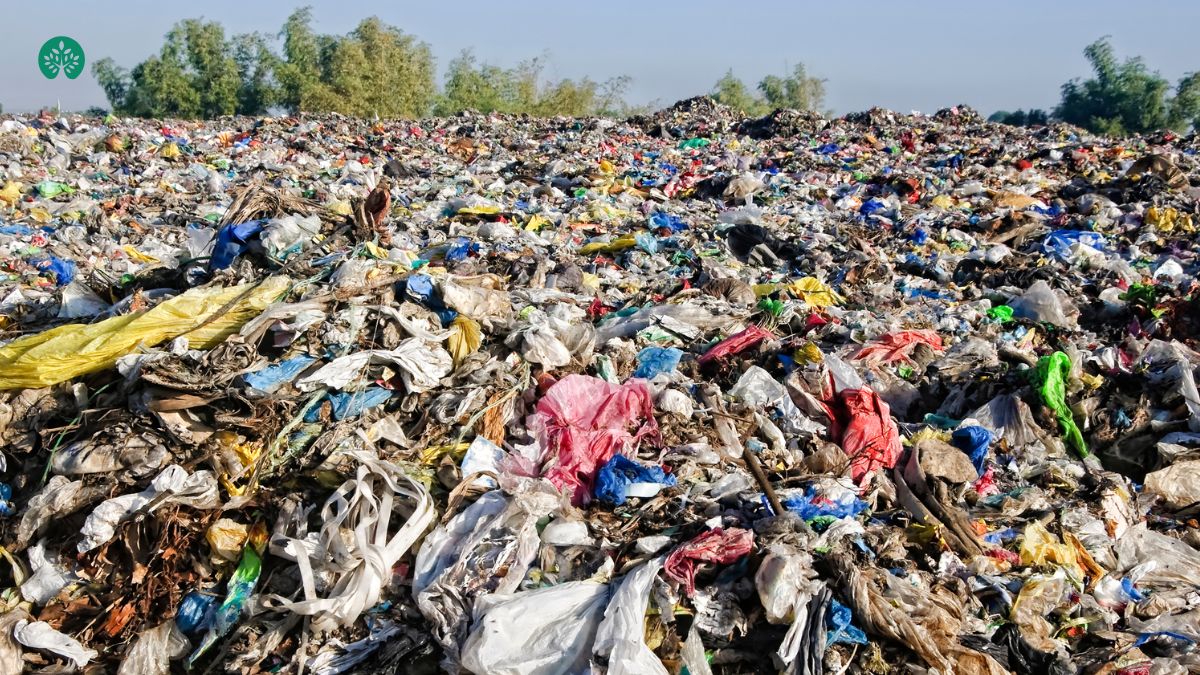
The Compounding Plastic Crisis: Mountains That Won’t Rot
Landfills are filling up at an unprecedented velocity, and the core culprit is material composition. Over 60% to 70% of all modern textiles are made from synthetic fibers—which are essentially petroleum-derived plastics like polyester, nylon, and acrylic.
Because these synthetic fibers cannot naturally decompose in the soil, throwing them away is an environmental dead-end. When millions of people discard their synthetic garments simultaneously, the compounding math takes over:
- The Accumulation Effect: Instead of breaking down, textiles pile up into literal multi-story trash mountains, trapping moisture and generating immense weight.
- The Foul Smell of Methane: Deep within these tightly packed waste mountains, anaerobic (oxygen-deprived) decomposition occurs. As natural fibers mixed into the garments try to break down without oxygen, they release massive amounts of foul-smelling methane gas (CH4), a greenhouse gas significantly more destructive than carbon dioxide.
- Forever Piles: A synthetic dress thrown away today will still occupy space in that landfill two centuries from now, creating an unsustainable geological footprint for future generations.
The Toxic Downstream Ripple Effect
The damage caused by these textile mountains extends far beyond the perimeter of the landfill itself. The compounding weight and chemical density actively poison Mother Nature from the ground up:
1. Microbial and Soil Destruction
Modern textiles require up to 15,000 different chemical additives during manufacturing, including heavy metals, toxic dyes, and flame retardants. As rainwater filters through landfills, it strips these chemicals away, pushing them deep into the earth. This toxic chemical cocktail alters soil chemistry, effectively wiping out crucial microorganisms required to keep land fertile.
2. Suffocating Local Flora
The surrounding plant life (flora) absorbs this contaminated soil water. Deprived of clean nutrients and poisoned by chemical heavy metals, local plant ecosystems suffer from stunted growth, leaf chlorosis, and systemic die-offs.
3. Choking Our Waterways
Landfill runoff eventually enters the broader water table, carrying billions of microscopic plastic fragments. These microplastics choke local rivers, block aquatic light, and disrupt the reproductive cycles of marine organisms.
“When we throw away a garment, we aren’t emptying a trash can; we are signing a long-term chemical lease with our local soil and water systems.”
The Core Solution: Fixing a Broken Recycling Supply Chain
To stop this compounding disaster, the global textile supply chain must completely pivot toward circularity. Right now, our recycling infrastructure is fundamentally broken.
[Current Linear Economy]: Take Material ➔ Make Garment ➔ Discard After Trend ➔ Compounding Landfill Waste
[Target Circular Economy]: Design for Longevity ➔ Wear ➔ Automated Sortation ➔ True Fiber-to-Fiber Recycling
The table below highlights the vast gap between how we currently dispose of clothing and where we actually need to be:
| Disposal Pathway | Current Global Share (%) | Environmental Impact | Target Future Share (%) |
| Landfilled / Buried | ~57% | Soil toxicity, aquifer contamination, microplastics. | < 5% |
| Incinerated / Burned | ~25% | Massive carbon emissions, toxic air pollution. | 0% |
| Downcycled (Rags/Insulation) | ~11% | Postpones waste briefly, but items still end up in landfills. | < 15% |
| Fiber-to-Fiber Recycling | < 1% | Pure circularity; completely eliminates the need for virgin plastic. | > 80% |
HFN Observation: The 50-Kilogram Illusion—Demanding an Audit Trail for Charity
It is time to stop sitting quietly and accepting passive greenwashing at face value.
When a conscious citizen packages 50 kg of discarded clothing and hands it over to an NGO, a brand’s take-back kiosk, or a municipal recycling drive, they do so under a moral contract. They believe they are participating in a solution. But the uncomfortable truth is that without radical transparency, your act of charity might just be an outsourced trip to a trash heap.
Globally, a staggering 70% to 80% of all donated clothing does not end up on thrift store racks or on the backs of people in need. Instead, massive volumes of these textiles are quietly bundled into massive bales and shipped across borders to developing countries, where up to 40% of each shipment is immediately deemed unusable waste and dumped straight into local rivers or open-air landfills.
Credits:-
https://www.unep.org/technical-highlight/sustainable-fashion-take-centre-stage-zero-waste-day#:~:text=This%20is%20the%20equivalent%20of,found%20the%20Ellen%20MacArthur%20Foundation.
https://earth.org/statistics-about-fast-fashion-waste/
https://www.eea.europa.eu/en/analysis/publications/circularity-of-the-eu-textiles-value-chain-in-numbers#:~:text=This%20is%20mostly%20due%20to,of%20the%20imports%20(45%25).
https://www.roadrunnerwm.com/blog/textile-waste-environmental-crisis#:~:text=And%20when%20consumers%20throw%20away,the%20groundwater%20and%20our%20soil.